We start from what a kite should do, then solve backwards.
Parawing firstPrototype · measure · correctNo product for sale yet
01 · Aeroelasticity
SHAPES IN FLIGHT.
A parawing has no single fixed profile. Its shape changes with apparent wind, loads, the bridle and control input.
Fine-tuning a theoretical profile may be of little use if the fabric takes a different shape in flight.
Which panel patterns, internal supports and bridle settings give us the right shapes at launch, at speed and when the control is released?
To study these changing shapes, we developed Cauchy142, our in-house aeroelastic code. It calculates how the fabric and bridle respond together to gusts and control inputs.
02 · The software
OUR OWN DESIGN SOFTWARE.
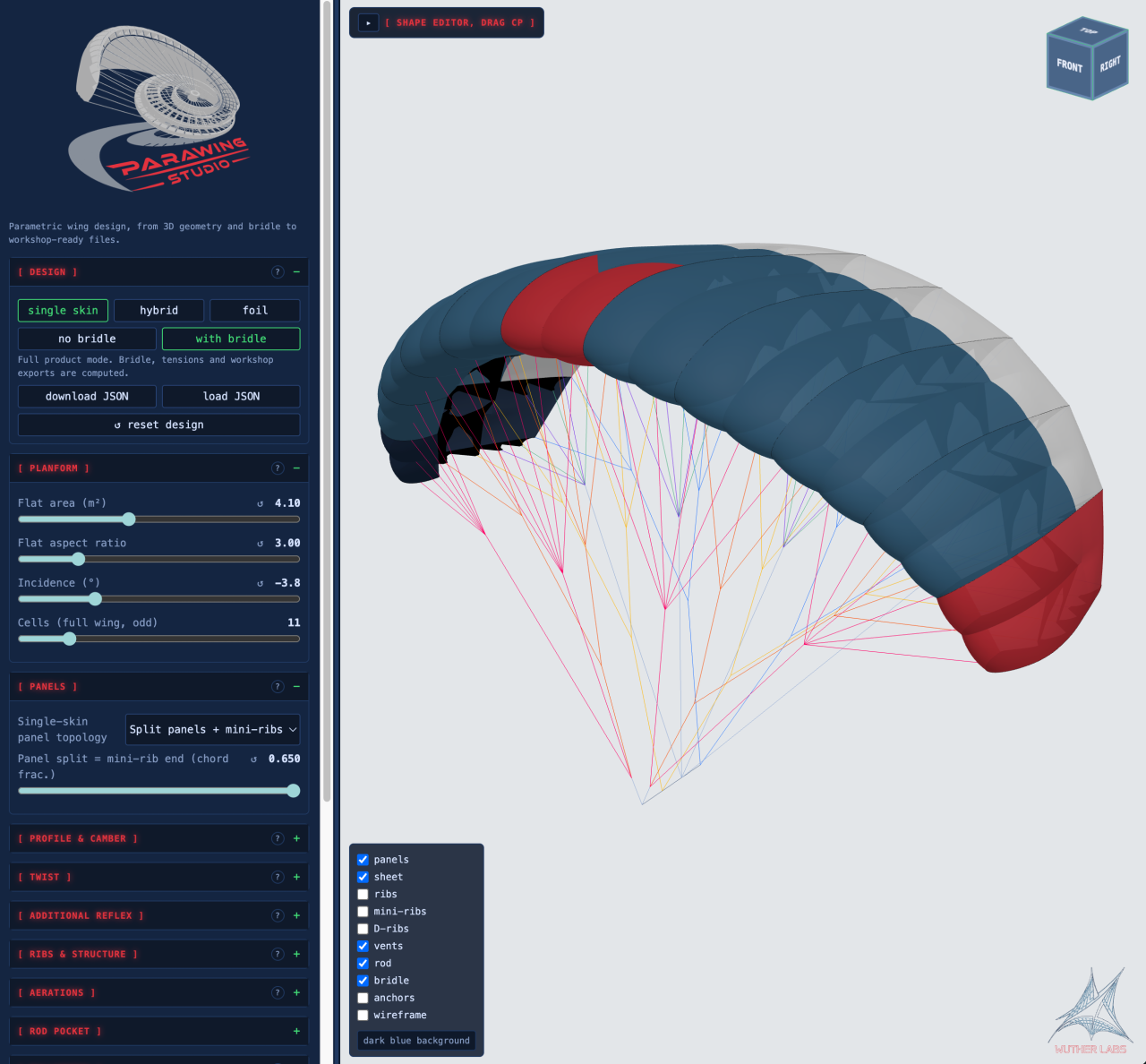
We built Parawing Studio to generate millions of wing geometries quickly, with precise control over each variation.
It is an internal tool, not commercially available. A design can be generated in a few tenths of a second.
03 · Geometry study
FINDING THE BRIDLE.
The bridle's job is to hold the wing in its intended shape under load.
We explore millions of layouts, looking for less line, fewer junctions and better support for that shape. The most promising candidates are then compared in aeroelastic simulations.
The flight model
THE SHAPE IN MOTION.
The flight model is a work in progress. We are collecting the flight data needed for physics-informed machine learning (PIML).
04 · The workshop
THE SECOND PROTOTYPE IS THE TEST.
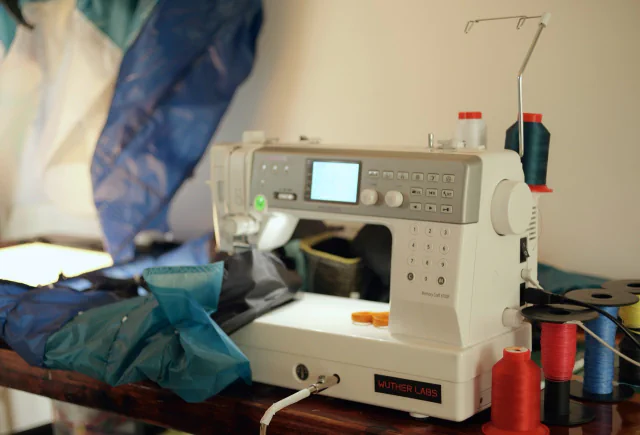
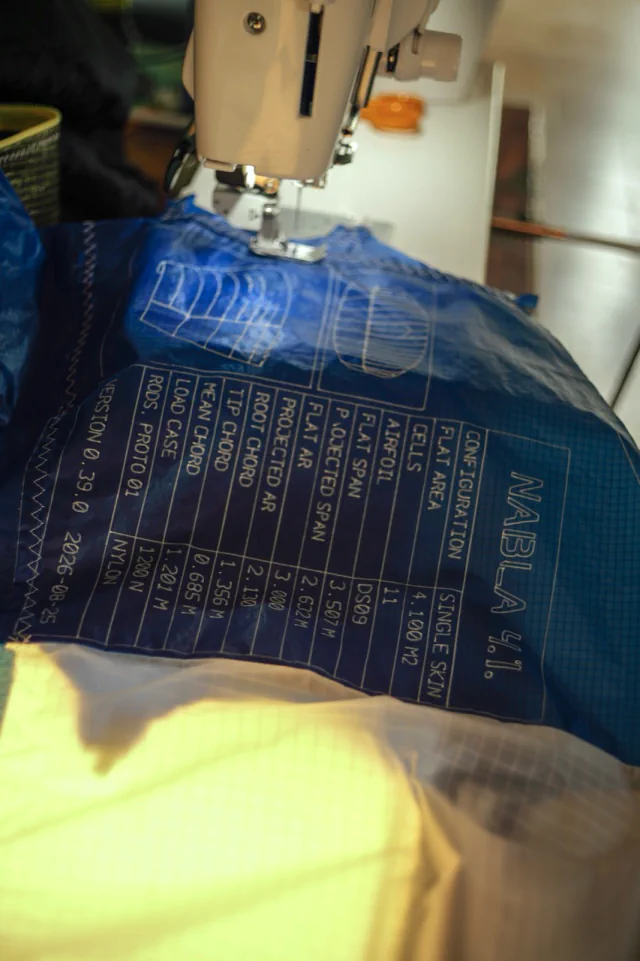
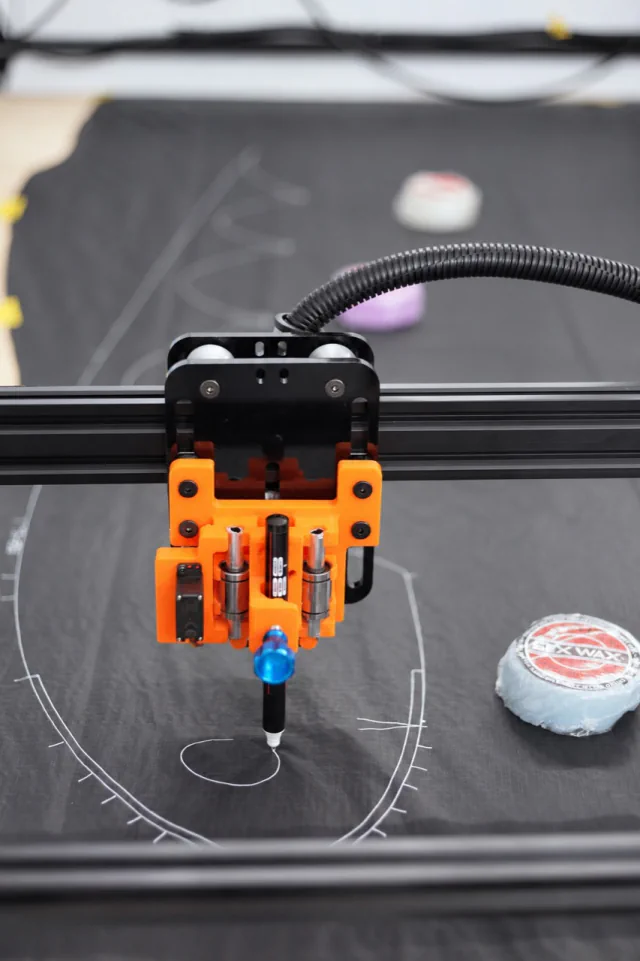
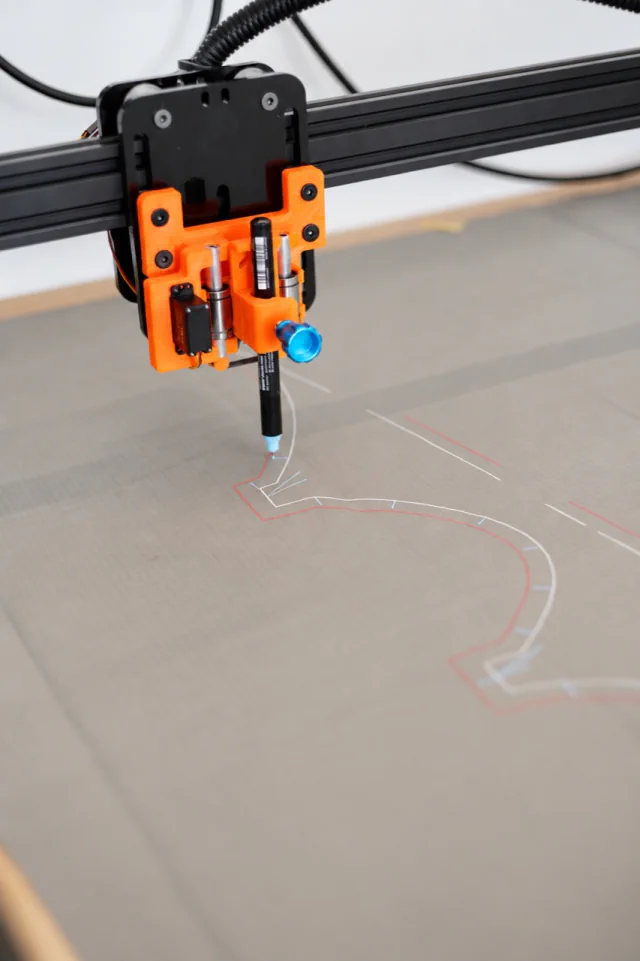
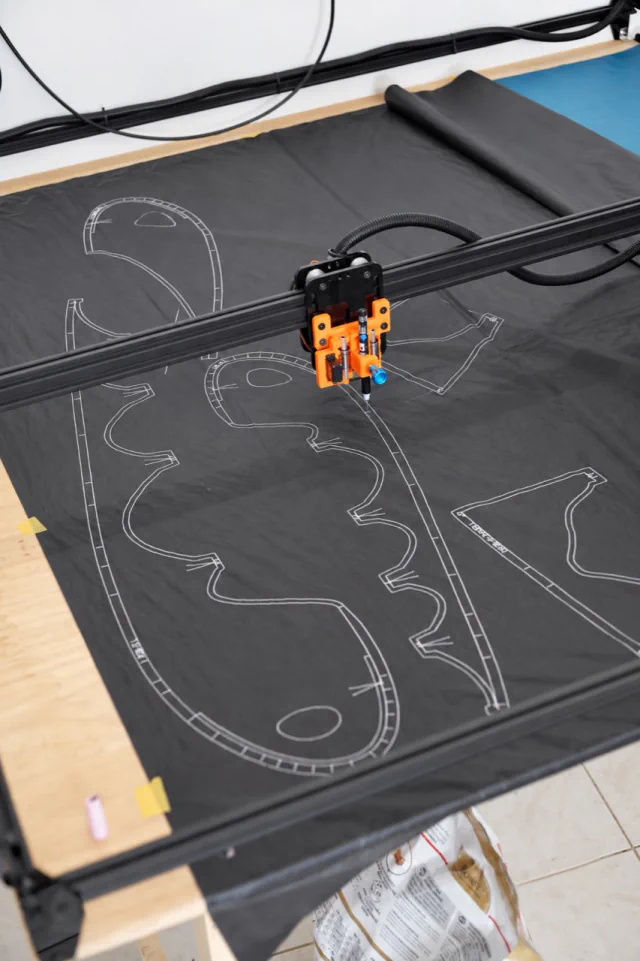
We turn the model into cloth and lines.
We build the first prototype to find where the model falls short. The second tests the corrections in flight.
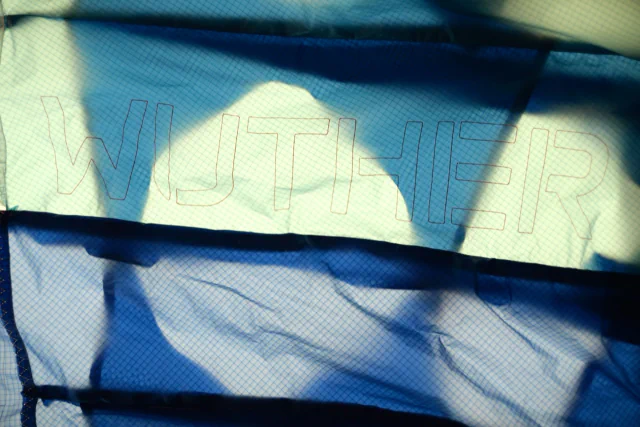
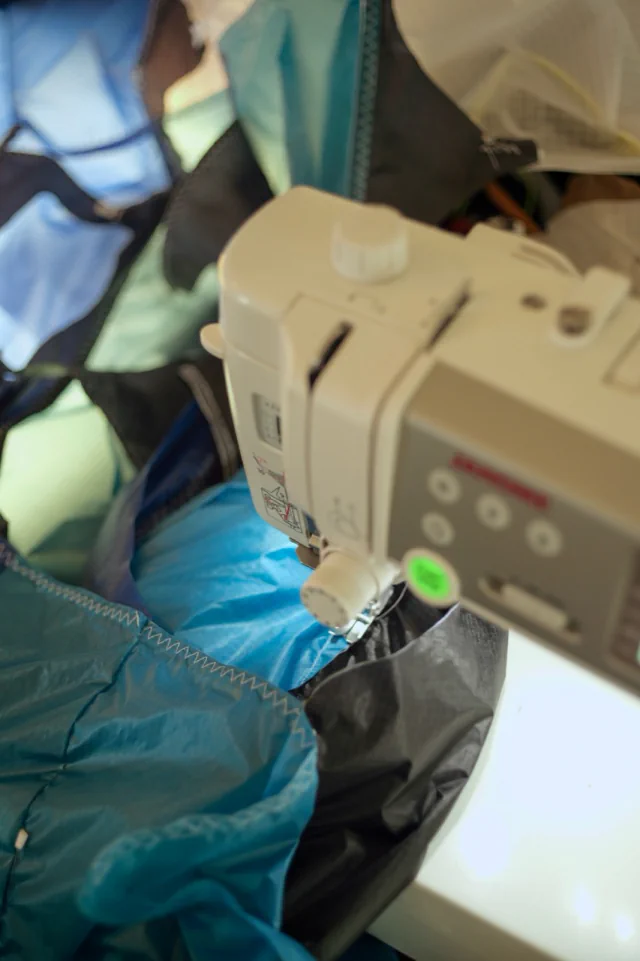
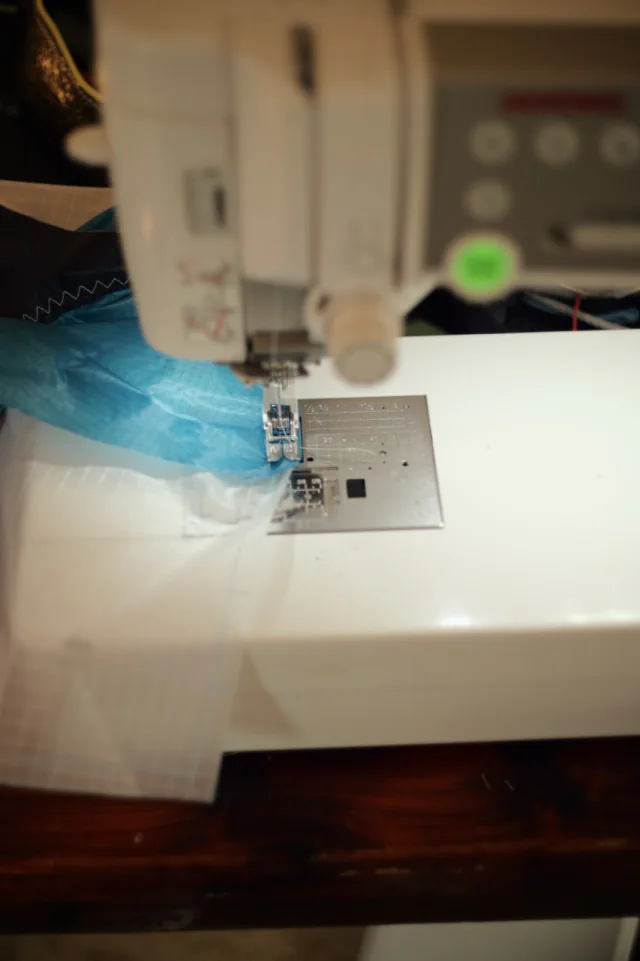
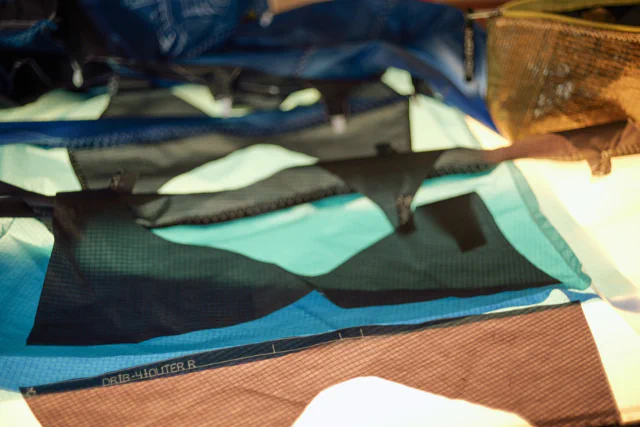
The workshopDrawn on fabricJoining the panelsAt the needleInside the wingThe prototypeThe pen plotterCut and seam marksPatterns on fabric